
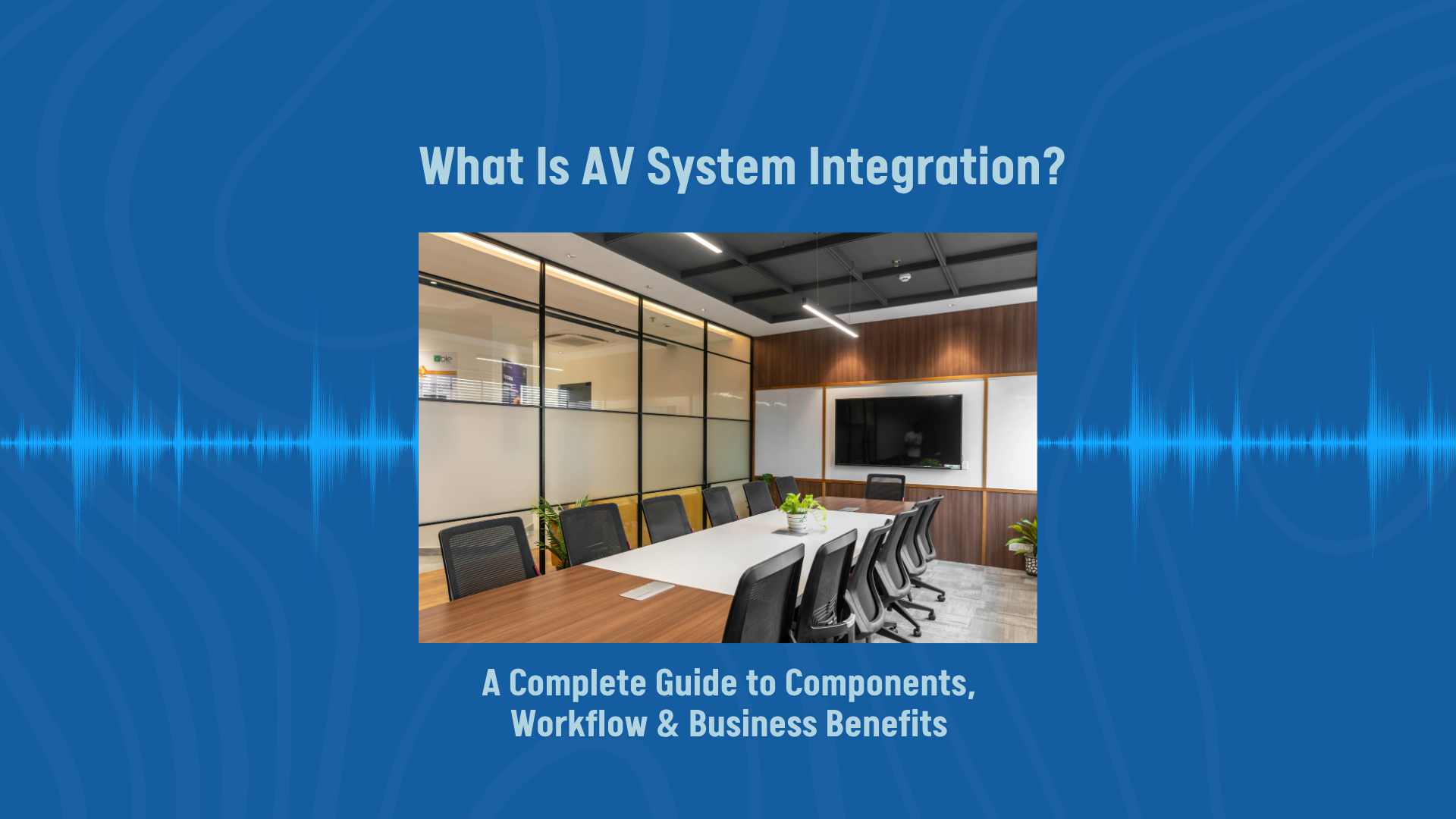
AV Integration – As businesses continue to embrace digital transformation, seamless communication and collaboration have become essential for success. Whether it’s a boardroom, conference room, auditorium, command center, or experience center, technology plays a crucial role in connecting people, ideas, and information.
This is where AV System Integration comes into play.
But what exactly is AV system integration? How does it work, and why is it becoming a necessity for modern organizations?
In this guide, we’ll explain everything you need to know about AV system integration, its key components, implementation workflow, and the business benefits it offers.
AV System Integration is the process of designing, installing, configuring, and integrating various audio-visual technologies into one unified system that works seamlessly together.
Instead of operating individual devices independently, system integration enables all AV components to communicate efficiently through a centralized control system.
A professionally integrated AV system may include:
The objective is simple: Create a reliable, intuitive, and scalable technology environment that enhances communication and collaboration.
Every AV integration project is unique, but most modern systems consist of the following components.
Display solutions include:
The ideal display depends on room size, viewing distance, ambient lighting, and intended usage.
Clear audio is just as important as visual quality.
Typical audio components include:
Proper acoustic planning ensures consistent sound coverage throughout the space.
Hybrid work has made video conferencing an essential part of modern workplaces.
Integrated conferencing solutions often include:
Professional integration ensures smooth collaboration regardless of participant location.
Rather than operating multiple remotes, users can manage the entire AV ecosystem through a single interface.
Typical automation functions include:
This improves user experience while reducing technical complexity.
Modern AV systems increasingly operate over IP networks.
A robust network infrastructure ensures:
Successful AV integration follows a structured process.
Every project begins with understanding the clients:
A detailed consultation helps define the right solution.
The design phase includes:
Good design minimizes future issues and ensures optimal system performance.
Professional installation involves:
Proper installation is critical for long-term reliability.
Once the hardware is installed, engineers:
This stage transforms individual devices into a unified AV ecosystem.
Before handover, every system undergoes comprehensive testing, including:
This ensures the system performs as intended.
Users receive training on:
Ongoing maintenance and support help maximize system uptime.
Integrated AV systems enable teams to collaborate seamlessly across multiple locations through high-quality audio, video, and content sharing.
With intuitive controls and automated workflows, employees spend less time troubleshooting technology and more time focusing on productive work.
Simple, one-touch operation reduces complexity and encourages greater adoption across the organization.
Reliable AV systems improve communication, minimize technical disruptions, and help meetings run more efficiently.
A professionally designed system can be expanded as business needs to evolve, protecting your investment over the long term.
Integrated systems simplify monitoring, maintenance, and troubleshooting, reducing operational costs and downtime.
Installing AV equipment is only one part of the process.
Professional AV integration ensures:
Working with an experienced AV integration company also helps organizations avoid costly installation errors and compatibility issues.
Read our blog on complete guide to choose an AV integrator
When evaluating an AV integration partner, consider:
A trusted partner will understand both your technical requirements and your business objectives.
AV system integration is more than connecting displays and speakers, it is about creating technology environments that improve communication, collaboration, and business performance.
From intelligent boardrooms and hybrid meeting spaces to auditoriums and experience centers, a well-integrated AV system delivers long-term value through reliability, scalability, and ease of use.
As organizations continue to modernize their workplaces, investing in professional AV system integration has become a strategic business decision rather than simply a technology upgrade.
If you’re planning an AV integration project, partnering with an experienced team can help ensure your solution is designed, implemented, and supported for long-term success.